How to Open an Ice Cream Food Trailer: Gelato, Refrigeration and Size
The right ice cream food trailer combines an attractive presentation, reliable refrigeration and enough work space — without relying on assumptions about power supply or the display case.
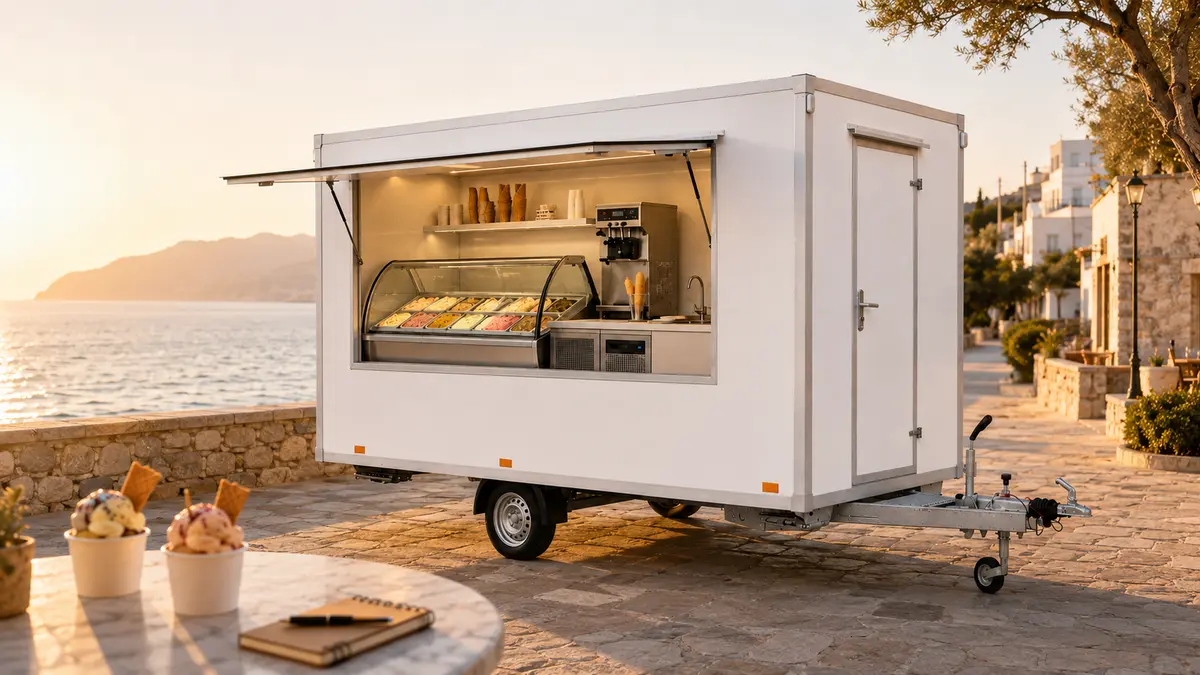
1. What kind of ice cream food trailer do you want to build?
An ice cream food trailer can operate as a small point selling ready-made ice cream, a refined gelato concept, or a fuller business with desserts, drinks and extra options. Each approach has different needs in terms of display case, storage, utilities and service space.
Before choosing a trailer, clarify whether you'll offer scooped gelato, individually packaged ice creams, soft-serve, or a combination of products. Also consider how many flavors you genuinely need, which products require different refrigeration, and whether the concept includes crêpes, coffee or other desserts.
Visual appeal matters a great deal for a towable gelato point, but the display case must first meet the real technical specifications and allow for smooth service.
2. Ice cream display case, freezing and storage
The main equipment choice is usually a professional gelato display case or another suitable refrigeration system for the specific product. Check the actual length, depth, height, ventilation space and operating requirements before finalizing the food trailer's layout.
Depending on work volume, you may also need supplementary refrigeration or freezer space for stock. A display case that just barely fits on paper but blocks the worker or the entry door will cause problems every day.
Product presentation and order flow
The position of the service hatch should let customers see the available flavors while allowing staff to serve comfortably. Plan an organized spot for cups, cones, spoons, packaging materials and, if used, toppings or extra products.
The stainless steel surfaces and auxiliary fabrications can improve organization, as long as they're designed around the exact dimensions of the display case and the expected staff movement.
Clarification: a gelato display case, freezer, soft-serve machine, stainless steel surfaces and any special configuration are not included in the base food trailer price and are costed separately.
3. Power supply matters as much as the photo
Refrigeration needs to run reliably at the actual installation site. Before choosing a professional display case or extra refrigeration equipment, request the technical requirements of the appliances and have the available electrical supply checked by a suitable professional.
Plan for the installation to potentially include more than one refrigeration unit, lighting, till equipment and auxiliary appliances. Ambient conditions, equipment ventilation and uninterrupted operation are critical, especially in hot locations or periods of high demand.
If water use, a proper sink or other infrastructure is required, review these needs alongside the menu, operating location and the requirements of the competent authority.
4. What size does a towable ice cream food trailer need?
The right size depends mainly on the display case, the space behind it, and any additional activities. A small gelato concept differs significantly from a food trailer combining multiple flavors, desserts and separate storage space.
| Model / length | Suitable starting point | What to factor in |
|---|---|---|
| SMALL3520 · 3.5 meters | A compact gelato point with a specific display case and a limited menu. | Actual display-case dimensions, staff access and storage. |
| MED4022 · 4.5 meters | More room for the display case, auxiliary refrigeration and comfortable service. | Order flow, door access and space for extra machinery. |
| LARGE5023 · 5 meters | A fuller dessert concept or higher capacity. | Installation site, transport and overall equipment planning. |
The guidance above doesn't replace measuring your actual equipment. Also consult the detailed food trailer size guide before deciding.
5. Location, food hygiene and vehicle paperwork
The operating location affects which procedure applies to the activity. Different requirements may apply for a private site, a tourist installation, a shared public space or an organized event. Before deciding, get guidance from the municipality and suitable technicians or consultants.
Because ice cream is a food product with particular storage requirements, you need to address proper refrigeration operation, cleanliness, safe product handling and staff training where required. Applicable hygiene rules also cover mobile or temporary food premises.
Separately, the towable trailer's own documents are reviewed. New e-kantina food trailers come with EU Type Approval and an EU Certificate of Conformity. Classification is checked by the competent authority, while the operating license or notification is a separate process.
See more on the operating license for a mobile food trailer and plates and classification documents (both in Greek, covering Greece-specific procedures).
Checklist before buying an ice cream food trailer
- I know whether the concept is gelato, individual ice creams, soft-serve, or a combination.
- I have the actual dimensions and technical requirements of the display case.
- I've checked the available power supply at the operating site.
- The staff position, hatch and auxiliary space are functional.
- I've reviewed the legality of operation and the trailer's documents separately.
- I know the display case and additional equipment are priced separately.
6. Real models for gelato and ice cream
For an organized compact concept, consider the SMALL3520. If you need more room for the display case and auxiliary refrigeration, compare the MED4022. For higher capacity or a fuller dessert concept, also see the LARGE5023.
Each model's page shows updated specifications and the current price. The display case, refrigeration units and special fabrications are chosen and costed independently.
Want to build an ice cream food trailer?
See available dimensions and real models, or discuss the display case and concept you're considering with us.
Official sources
- OpenBusiness (Greek government portal): questions and answers about food trailers. This is a general licensing guide; for the specific matter of the operating license for towable food trailers, see our detailed guide (in Greek).
- EFET (Greek food-safety authority): good hygiene practice guides.
- EFET: staff training for food businesses.
- Regulation (EC) 852/2004 on food hygiene.
Technical and health requirements are reviewed case by case by the competent authorities and appropriate professionals. This article is informational and does not replace personalized legal, technical or health advice.